Remodeling a Historic Shaker Heights Home: 2026 Guide
What needs design review, how to handle slate, plaster, and leaded glass, and how long it takes.
To remodel a historic Shaker Heights home, plan for two approvals: building permits for the work itself, and Architectural Board of Review (ABR) approval for anything that changes the outside, including additions, windows, doors, decks, siding, and roofs. Interior-only projects, such as most kitchen and bathroom remodels, usually need only building permits. Homes on a local landmark or in the Winslow Road or Shaker Square districts also go to the Landmark Commission.
Key takeaways
- ABR first: exterior changes must be approved before a building permit is issued.
- Like-for-like is faster: replacement windows, doors, and roof shingles that match the existing ones can often be approved by Planning staff.
- Slate stays slate when it can: the city asks that slate, tile, and wood roofs be repaired when possible, and asphalt may not be used to patch them.
- Plan extra time: the city warns you may need to go before the board a second time.
- Selling soon? Shaker Heights requires a point-of-sale inspection before a home changes hands.
Why are Shaker Heights homes different?
Shaker Heights was planned by Oris and Mantis Van Sweringen, who began developing it in 1905 as a garden suburb with strict design and deed restrictions. The city grew from about 1,700 people in 1920 to about 17,800 by 1931, so a large share of its houses date from the 1920s. About 75 percent of the city lies within the Shaker Village Historic District on the National Register of Historic Places.
That history shows up in the houses. English Colonial and Tudor Revival were the most popular styles, alongside French-Norman and Colonial Revival homes. Remodeling one well means working with the style, not against it.
What details should you protect in a Tudor or Colonial Revival home?
| Style | How to recognize it | What to protect during a remodel |
|---|---|---|
| Tudor and English Revival | Steep side gables, tall chimneys, stucco and brick walls, small casement windows, little roof overhang | Leaded casement windows, dark wood paneling, built-in shelves, slate roofs |
| Colonial Revival | Symmetrical front, shallow roof, classical door surround, double-hung windows with shutters | Entry trim and door surround, window pattern, plaster cornices, slate roofs |
| French-Norman Revival | Steep slate roof with flared eaves, dormers through the roofline, sometimes a round tower | Roof shape and slate, original leaded windows, tower details |
What needs Architectural Board of Review approval?
The ABR reviews new buildings and exterior changes to existing ones, including additions, window and door changes, outbuildings, decks, siding replacement, and roof replacement. Under the city's rules, these must be approved by the ABR before a building permit is issued.
Some minor changes can be approved by Planning staff instead of the full board. Examples the city gives include a common replacement window or roof shingle that matches the size, style, color, and look of what is there now. Shingle colors come from a pre-approved palette, generally in darker tones.
Submissions go through the city's online permit portal and need clear photos and drawings at a measurable scale, usually 1/4 inch to 1 foot for building drawings. Incomplete applications are not accepted. The Planning Department can be reached at 216-491-3216.
Can you replace a slate roof in Shaker Heights?
Yes, but repair comes first. The ABR's guidelines say slate, copper, clay tile, and wood shakes should be repaired and maintained whenever possible. If a roof is beyond repair, asphalt or fiberglass-reinforced asphalt shingles are acceptable in most cases, and slate, synthetic slate, or cedar shakes are encouraged for some styles. Asphalt shingles may not be used to patch a slate, wood, or tile roof, new asphalt shingles need at least a 30-year warranty, and you may not replace more than 25 percent of a roof without replacing the whole roof.
What about siding, windows, and doors?
- Siding: replacing siding with aluminum, vinyl, or another manufactured material needs ABR approval, with samples, photos of every side, and detail drawings of the rake, soffit, fascia, and window casings. Siding over existing casings is not permitted, and significant details must be preserved.
- Windows and doors: replacements that match the existing size, style, color, and appearance may be approved by staff. New openings should follow the house's existing window pattern.
- Porches and decks: pressure-treated wood is fine for structure, but finish parts should be cedar, redwood, or cypress.
Do landmark homes need extra approval?
Yes. The Landmark Commission reviews all exterior changes to the city's individually designated landmarks and to homes in the Winslow Road and Shaker Square local historic districts, including landscape changes. Being in the National Register's Shaker Village Historic District alone does not trigger Landmark Commission review; the ABR still applies.
How do you update an older home inside without losing its character?
- Plaster: repair sound plaster rather than tearing it out. In bathrooms, wet walls are rebuilt with cement board behind tile.
- Wiring and pipes: knob-and-tube wiring and galvanized or cast-iron pipes are best replaced while walls and floors are already open.
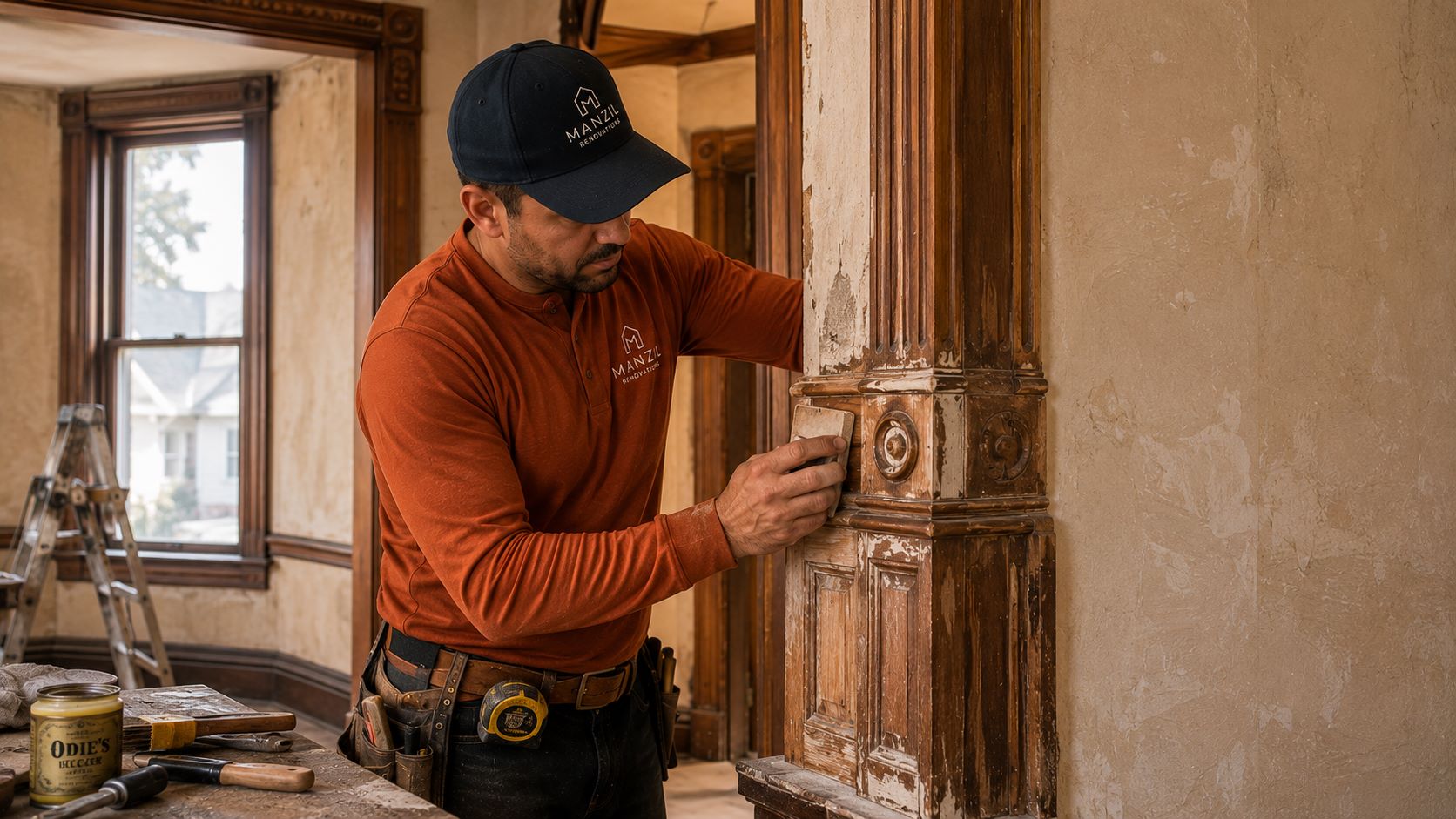
- Woodwork and leaded glass: protect, remove and reinstall, or match it, rather than replacing it with stock trim.
- Mortar-bed tile: original tile floors are thick and solid, and are often worth saving or matching.
- Lead paint: homes built before 1978 fall under the EPA's lead-safe renovation rules whenever painted surfaces are disturbed.
Read more in our guide to restoring a historic Cleveland home.
How long does a historic remodel take in Shaker Heights?
Interior work follows normal timelines: a standard bathroom remodel usually takes 1 to 3 weeks of construction, and a kitchen about 6 to 10 weeks. Exterior work adds design review before the building permit. The city does not publish a fixed review time and warns that you may need to appear before the board a second time, so build that into your schedule. For large projects, the ABR suggests a preliminary submission before the formal one.
What if you are selling a Shaker Heights home?
Sellers must apply for a point-of-sale inspection before signing a sales contract. If the inspector finds violations, they must be corrected within 90 days, or the city holds 150 percent of the estimated repair cost in escrow at transfer. If the buyer takes on the repairs, the escrow is based on an itemized estimate from a registered contractor. Starting the inspection early leaves time to plan repairs instead of rushing them.
What does a historic remodel cost?
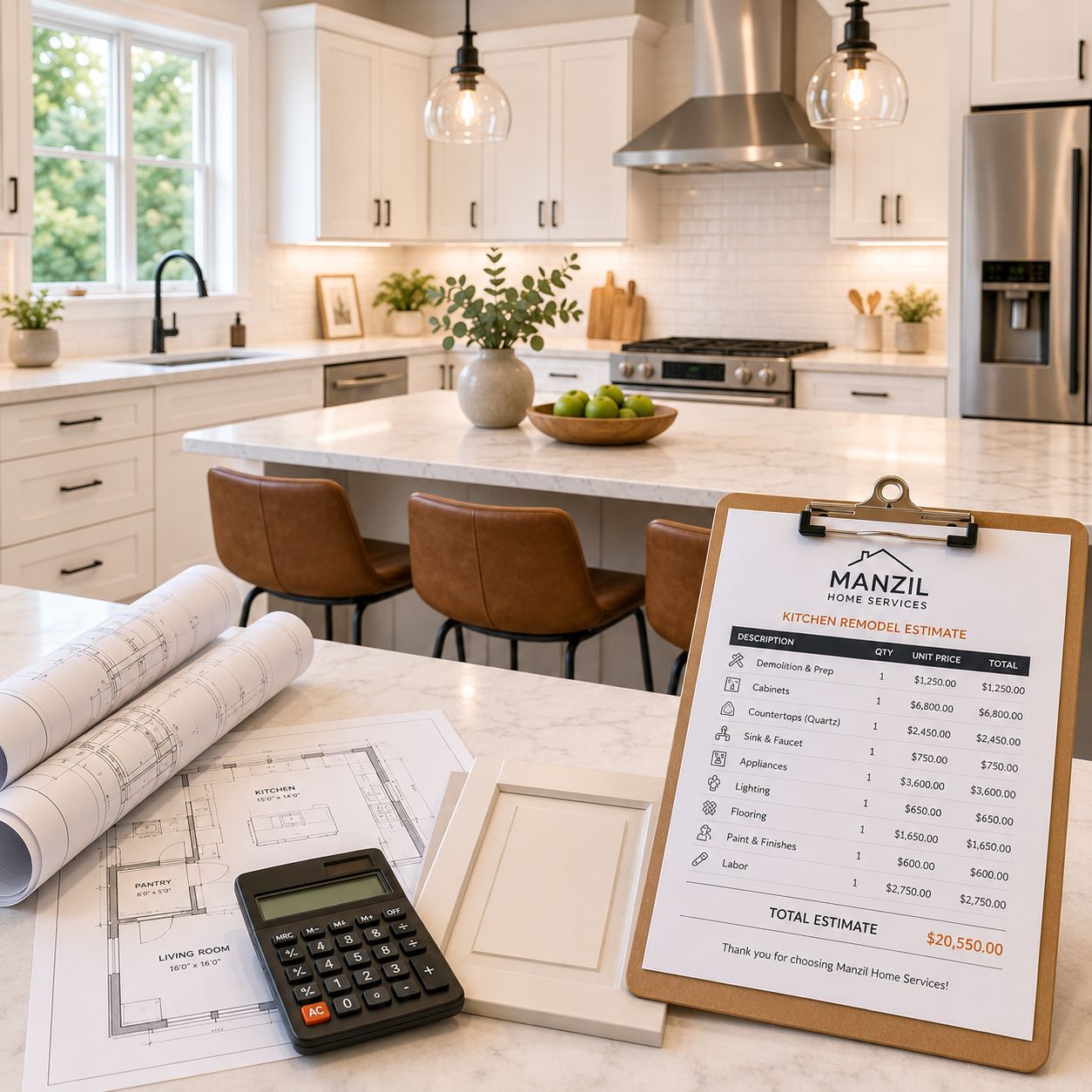
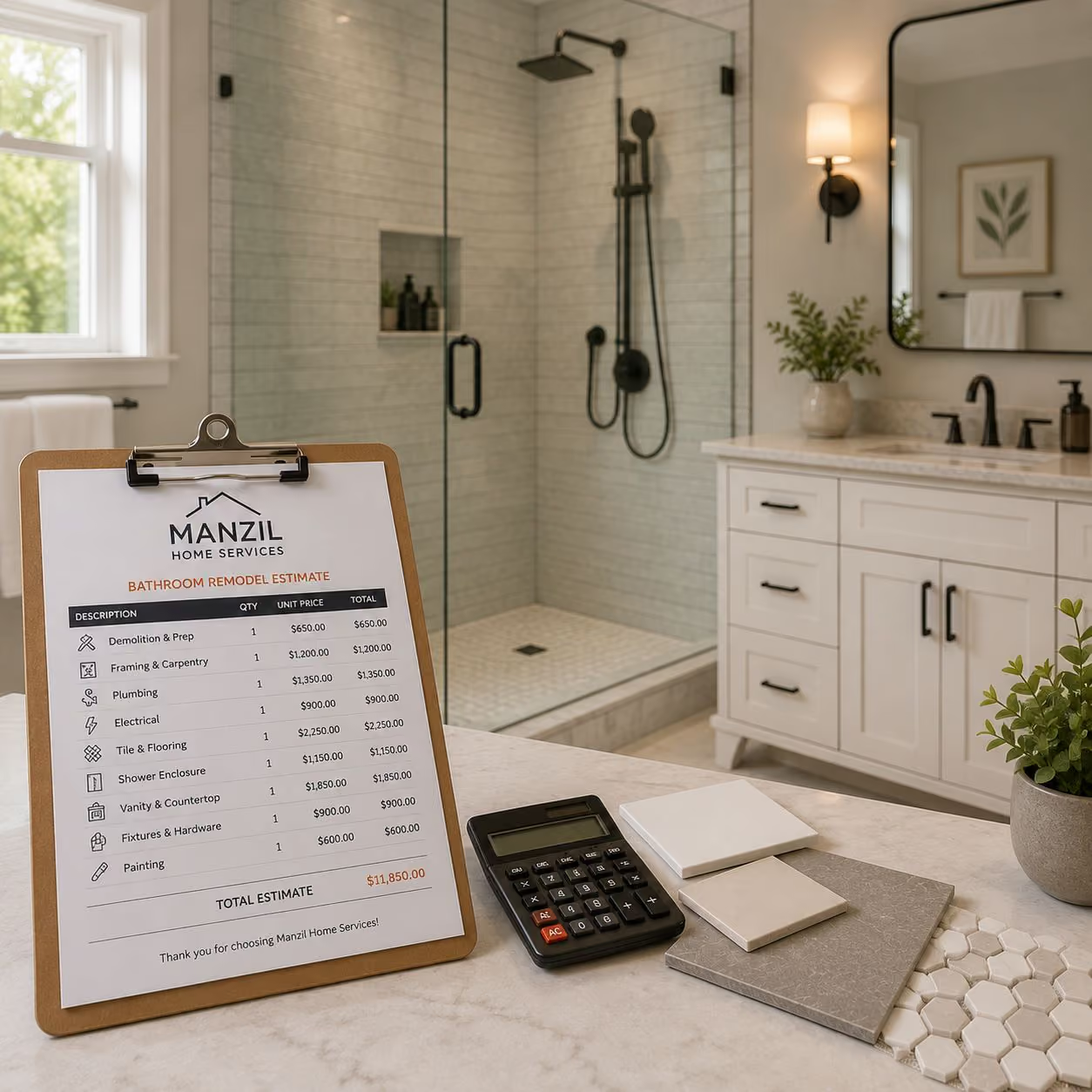
Our published ranges apply here too: most kitchens cost $15,000 to $40,000, full bathrooms $8,000 to $18,000, and whole-home renovations $40,000 to $150,000 or more. Older homes more often need wiring, plumbing, and plaster work, so plan a contingency. See our renovation cost table by suburb.
How Manzil Renovation helps in Shaker Heights
We remodel bathrooms in Shaker Heights and handle kitchens and whole-home renovations across the Heights, including nearby Cleveland Heights. We pull the building permits, schedule inspections, and prepare the ABR submission when a project changes the outside of the house. Request a free estimate to talk through your home.
Frequently Asked Questions
Do I need ABR approval to remodel my kitchen or bathroom in Shaker Heights?
Usually not. Interior remodels need building permits and inspections, but the Architectural Board of Review covers exterior changes. If your remodel adds or changes a window, a door, or anything else on the outside, that part needs ABR or staff approval before the permit is issued.
Can I replace my windows in a historic Shaker Heights home?
Yes. Replacement windows that match the existing size, style, color, and appearance may be approved by Planning staff instead of the full board. New openings or a different style go to the Architectural Board of Review and should follow the house's existing window pattern.
Can I put an asphalt roof on a Shaker Heights home with slate?
Only if the slate is beyond repair. The city asks that slate be repaired when possible and does not allow asphalt patches on slate roofs. Replacement asphalt shingles need at least a 30-year warranty and a color from the approved palette.
Is my home a Shaker Heights landmark?
The city has 46 individually designated landmarks plus the Winslow Road and Shaker Square local districts. Homes in those need Landmark Commission review for exterior changes. Most other homes sit in the National Register district, where the Architectural Board of Review applies.
Do I need a point-of-sale inspection to sell my Shaker Heights house?
Yes. Sellers apply online before signing a sales contract. Violations must be fixed within 90 days, or 150 percent of the estimated repair cost is held in escrow at closing.